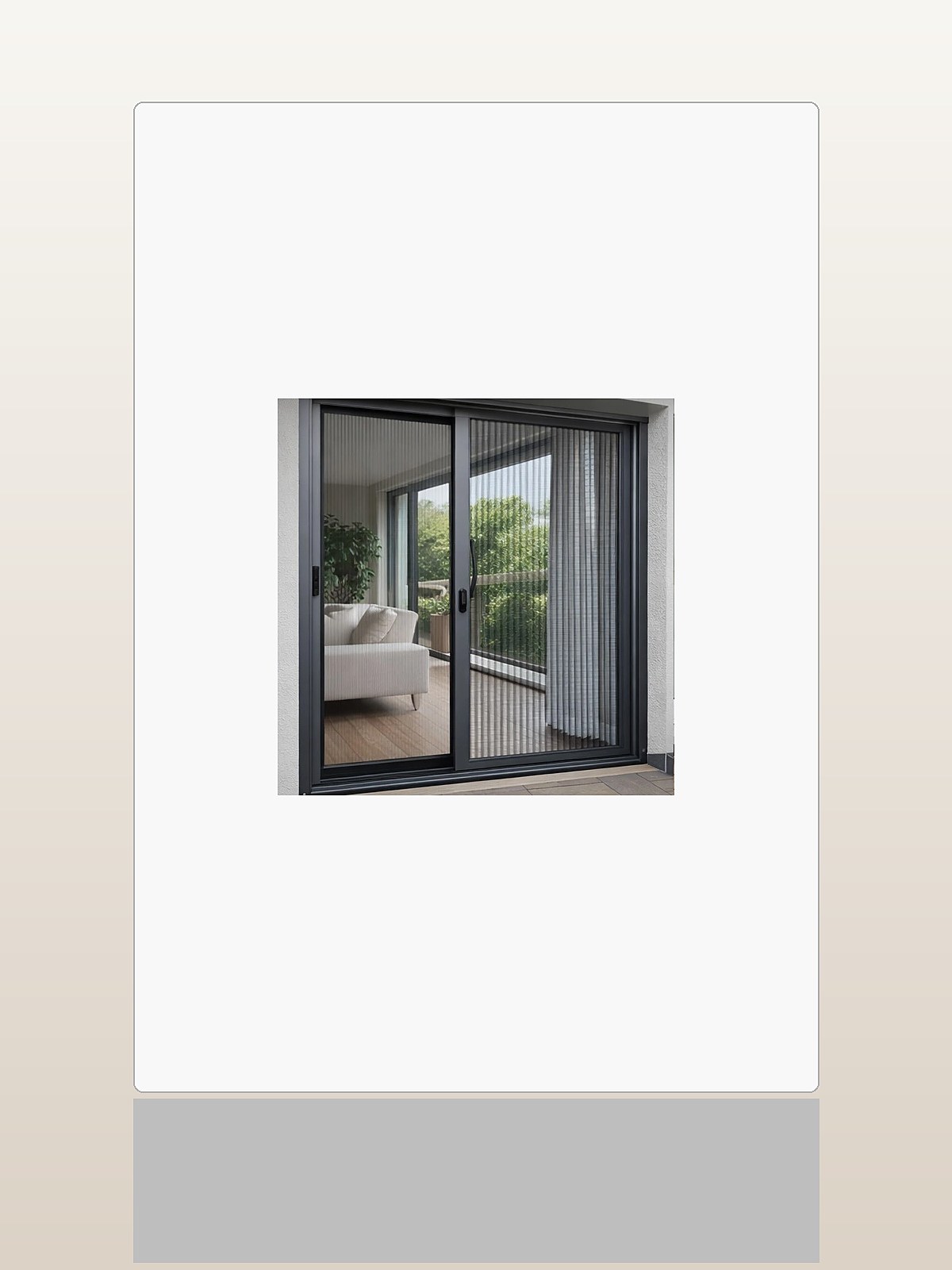
Hinged Fly Screen or Pleated Fly Screen? Which Model Suits You Best?
When ventilating our homes in the summer months while staying protected from flies and insects, two systems are the most popular choices: the hinged fly screen and the pleated (accordion) fly screen. Both systems have their own unique advantages, ease of use, and cost differences. In this guide, taking into account Tbilisi's evolving building standards, we break down exactly which model will best meet your needs.
1. What Is a Hinged Fly Screen? What Are Its Advantages?
Hinged fly screens are the traditional and most widely used systems. Just like a window sash, they have a frame mechanism that opens outward (or sometimes inward).
Advantages of the Hinged Fly Screen:
- Economical Solution: More affordable compared to other systems.
- Thorough Cleaning: Can be easily removed from its hinges and washed in the bathroom or on the balcony.
- Durability: Because its profile structure is simple, it provides trouble-free service for many years.
Disadvantages of the Hinged Fly Screen:
Since it opens outward, the usable space is reduced if there's a flowerpot, shutter, or railing in front of the window. It also carries a risk of banging shut if left open in windy weather.
2. What Is a Pleated (Accordion) Fly Screen? Why Is It So Popular?
Also known among the public as an "accordion fly screen," the pleated fly screen works on the principle of the mesh folding and gathering inside a housing. It is unrivaled in modern architecture, especially in tight spaces and on balcony doors.
Advantages of the Pleated Fly Screen:
- Space Saving: Requires no swing clearance; it gathers to the side or up and down within its own housing.
- Aesthetic Appearance: Its decorative mesh structure and stylish profile bring a modern feel to your home.
- Suitable for Every Space: The most ideal solution for French balconies, sliding doors, and large glass balconies.
- Ease of Use: You can stop it at any point you like; you don't have to fully open or fully close it.
Disadvantages of the Pleated Fly Screen:
Due to its mechanism, it is somewhat more costly than hinged models. Cleaning should be done by wiping it in place; unlike hinged models, it's not recommended to remove and wash it.
3. Technical Comparison: Which One Should You Choose?
Keeping the following criteria in mind when choosing will help you get the most out of your investment:
| Feature | Hinged Fly Screen | Pleated Fly Screen |
|---|---|---|
| Application | Standard Windows | Doors, Balconies, Tight Spaces |
| Opening Style | Opens Outward | Sliding / Folding |
| Cost | Economical | Mid-Range |
| Cleaning | Washable | Wipeable |
Tbilisi Climate and the Dust Factor
Considering Tbilisi's dusty winds, the mesh structure of pleated fly screens is quite effective at keeping dust out. However, if you enjoy cleaning frequently, removable and washable hinged models may feel more practical to you. On the other hand, in the new generation of Tbilisi fly screen trends, we see that pleated models are chosen 80% more often due to their lifespan and comfort.
4. Critical Warning for Cat Owners
If you have a cat at home, neither a hinged nor a standard pleated fly screen should be your choice. The mesh structure of both models is not resistant to cat claws. You should instead choose pet screen models, specially manufactured for cats, that are pressure-resistant and steel-wired.
Which Makes More Sense?
If your budget is limited and there's no barrier in front of your window blocking the swing, a hinged fly screen will do the job. However, if comfort, aesthetics, and space-saving are your priorities, you should definitely choose a pleated (accordion) fly screen.
Don't decide without consulting our expert team, who offer free site surveys and model guidance throughout Tbilisi. Contact us to determine the system best suited to your home.